 lt
 en
 RIDE-E electric transport
 Electric bikes
 Manufacturers
 ADO
 DUOTTS
 DAHON
 FIIDO
 ECOBIKE
 ENGWE
 KOOLUX
 OneSport
 OVIVO
 RIDING TIMES
 RIDE-E electric bicycles
 APEFOX
 Foldable
 City (ATB)
 Gravel
 Power FAT bike
 Cargo
 Mountain biking (MTB)
 Lightweight / mobility
 Step-through
 Electric scooters
 Brands
 TEVERUN
 TEVERUN BLADE MINI
 TEVERUN FIGHTER
 ENGWE
 VSETT
 KOOLUX
 With seat
 Big wheels
 For kids
 Most popular
 One motor scooters
 Two-wheel drive scooters
 Mobility scooter
 Three wheel scooters
 One seat electric scooter
 Two-seater electric tricycles
 Electric tricycles with roof
 Electric Tricycles scooter without Roof
 Passenger electric tricycles
 Electric cargo tricycles
 Street legal electric tricycles
 Non-registrable electric tricycles
 Four wheel scooters
 Single-seat electric quad bike
 Two-Seat Electric Quad
 Electric quads with roof
 Electric quad bikes without a roof
 Electric quad bikes for passengers
 Electric cargo quad bikes
 Registered electric quadricycles
 Non-Registrable Electric Quadricycles
 Trikes and quadricycles are available for registration
 All mobility scooters
 Electric cargo transport
 Electric wheelchairs
 Electric Wheel Chairs
 TPPC compensated electric wheelchairs
 MINI electric cars
 Electric mopeds
 Brands
 E-FUN
 ELECTRORIDE
 TALARIA
 RIDE-E
 Need to registration
 No need to registration
 Electric choppers
 Electric unicycles (EUC)
 Brands
 INMOTION
 KING SONG
 LEAPERKIM
 Parts
 Parts for electric scooters
 Tires
 8\" - 8.5\" tires
 9\" tires
 10\" tires
 11\" tires
 Other tires
 Tire valves, valve extensions
 13\" tire
 Inner Tubes
 For 8\" - 8.5\" - 9\" tires
 For 10\" tire
 For 11\" tires
 Other inner tubes
 Brake System
 Brake Pads
 Brake Discs
 Brake Handles
 Brake calipers
 Brake Lines
 Hydraulic Brake Systems
 Drum Brake Systems
 Body Parts, Forks, Suspension, Fenders
 Fenders
 Suspensions
 Seats
 Kickstands
 Folding Mechanism Parts
 Covers and Caps
 Anti-slip stickers / rubber mats
 Frame/ Frame parts
 Forks
 Electronics
 Switches
 Displays
 Cables and Connections
 Batteries
 Controllers / Main Boards
 Chargers
 54.6V - For 48V Batteries
 42V - For 36V Batteries
 58.8V - For 52V Batteries
 67.2V - For 60V Batteries
 84V - For 72V Batteries
 63V - 54V for batteries
 Throttles
 Fuses
 BMS / PCB boards
 Headlights, Lamps, LED Lights
 Headlights
 Lamps, LED Lights
 Battery cells
 Battery connectors
 All Parts
 Steering handlebars
 Handlebar Extenders
 Handlebar Grips
 Handle Bars For Kids
 Handlebars
 Steering Mechanism Parts
 Motors and Wheel Hubs
 Motors
 Wheels
 Bearings and Bearing Parts, Screws, Bushings, Gaskets, Nuts and Washers
 Bearings and bearing Parts
 Screws
 Įvorės
 Bushings
 Gaskets
 Nuts and Washers
 Tools and maintenance products
 Tools
 Care products
 Cleaning products
 Lubricants
 Screw glue
 Sealants / Silicones
 Parts for scooters by model
 Pulse
 Xiaomi
 Inokim
 Ninebot
 Zero
 Kugoo
 Dualtron
 HX
 Kaabo
 Neoline
 All Parts
 S8X riedis-electric
 Ultron
 E-TWOW
 BOOSTER ES
 GT SPORT
 TEVERUN
 TEVERUN BLADE MINI
 TEVERUN FIGHTER 11 /11+
 TEVERUN FIGHTER SUPREME
 TEVERUN FIGHTER SUPREME 7260R
 TEVERUN FIGHTER MINI
 TEVERUN FIGHTER Q / BLADE Q
 TEVERUN FIGHTER 10
 VSETT
 VSETT 8 8+
 VSETT 9 9+
 VSETT 10+
 S10X
 S10X riedis-electric
 S10X BIRD LIMITED
 S10X PRO / S10X DUAL PRO
 NIU
 BLADE
 BLADE 10
 BLADE GT
 BLADE X
 BLADE GT 2
 Inmotion
 Electric bicycle parts
 Tires
 Inner Tubes
 Electronics
 Controllers / Main Boards
 Displays
 Sensors
 Electric bike wires/cables and connectors
 Batteries
 Motors
 Throttles
 Chargers / Power supplier
 42V - 36V Batteries
 54.6V - 48V Batteries
 Headlights, Lamps, LED lights
 Headlights, Taillights
 Brake system
 Body Parts, forks, suspension, fenders
 Bags and racks
 Bearings and Bearing Parts, Screws, Bushings, Gaskets, Nuts and Washers
 Drivetrain system parts
 Electric unicycle parts
 Tires
 Tubes
 Electric bicycle parts by model
 ADO
 ADO A16 A16+ A16 XE
 ADO A20 A20+ A20 XE
 ADO A20F A20F+ A20F XE BEAST
 ADO Air 20 Air 20S
 ADO A26 A26+ A26S XE
 ADO D30 DECE 300 300C
 ENGWE
 EP-2 PRO
 ENGINE PRO
 M20
 L20
 E26
 E26 ST
 C20 PRO
 L20
 X20
 T14
 X24
 X26
 FIIDO
 L3
 Tricycle / quadricycle parts
 Mini car parts
 Accessories
 Safety gear
 Bags / rear rack
 Phone Holders
 Mirrors
 Horns
 Dampers
 Locks
 GPS trackers
 Headlights, lamps, LED lights
 Headlights
 Covers
 Electric pumps
 Alarms
 ENGWE electric bikes
 Discounts
 Brands
 Service
 Insurance
 Business
 Video
 Contacts



There are no more items in your cart

 Items catalog
PAS vs TORQUE Sensors: What's the Difference and Which One to Choose?
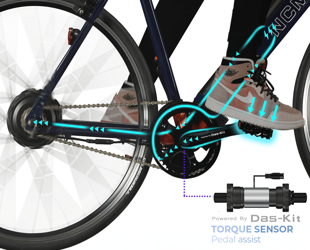
PAS vs TORQUE Sensors: What's the Difference and Which One to Choose?
When choosing an electric bike, many customers ask the same question – what's the difference between PAS and TORQUE sensors, and which is better for everyday use, sports, or long rides?
Here’s a clear answer.
❇️ PAS (Pedal Assist Sensor) – older, but still commonly used technology
The PAS sensor works simply: it detects when the rider starts pedaling. When this happens, the motor turns on automatically according to the selected assistance level – but it does not measure how hard you are pedaling.
This means that even with a light pedal movement, the motor can start pulling at full power. Especially during starts, the bike might jump forward unexpectedly, even if there’s a gate, a car, or a person in front of you.
That’s why with PAS bikes, it's always recommended to hold the brake before pedaling, to avoid an uncontrolled start.
This system is suitable for relaxed rides where precise power control isn’t necessary and simple handling is preferred.
⚡ TORQUE Sensor – smart, next-generation technology
The TORQUE sensor (also called a torque-sensing pedal assist) detects not just the motion of your pedaling, but how hard you’re pressing.
As a result, you get proportional, smooth, and natural motor assistance.
If you pedal hard – you get more power. If you pedal lightly – the motor gives just a little help.
Key advantages of the TORQUE sensor:
-
? Smooth starts – no sudden jerks forward, because power is based on how hard you're pressing, not just whether the pedals are turning;
-
? More efficient battery usage – since the motor engages only when needed, you can ride significantly farther on the same battery (especially important for 500–700 W e-bikes);
-
? More active riding – because it responds to your effort, you can move more, get some real exercise, but still get help when needed;
-
? More natural ride feel – like riding a regular bike, just with electric support when you need it.
Comparison Table: PAS vs TORQUE Sensor
| Feature | PAS Sensor | TORQUE Sensor |
|---|---|---|
| Pedal detection | Detects if you're pedaling | Detects how hard you're pedaling |
| Power delivery | Delivers preset power level | Delivers power proportionally to effort |
| Start behavior | Can suddenly "jump" forward | Smooth and controlled starts |
| Battery efficiency | Uses more energy overall | More efficient – longer range on same battery |
| Riding feel | Feels artificial, sometimes too strong | Natural and responsive – like a regular bike |
| Exercise/flexibility | Less physical effort required | Encourages pedaling, better for light exercise |
| Beginner-friendly | Suitable, but start safety needed | Great for all levels, especially for smooth control |
| Safety | Sudden starts can be risky | Safer thanks to sensitive, gradual motor input |
✅ Which One Should You Choose?
If you value comfort, natural riding, longer range, and safer starts – the TORQUE sensor is the clear winner.
Especially when buying a powerful 500–700 W e-bike, this technology lets you better control power and get the most out of your battery, meaning fewer recharges and more freedom on the road.